The Gift of A.A.
My friend Kevin O., who was my roommate at my first Matt Talbot retreat in 2023, described what happened to him when he was living in New Orleans and only 2-3 years sober, in 1996 or '97.
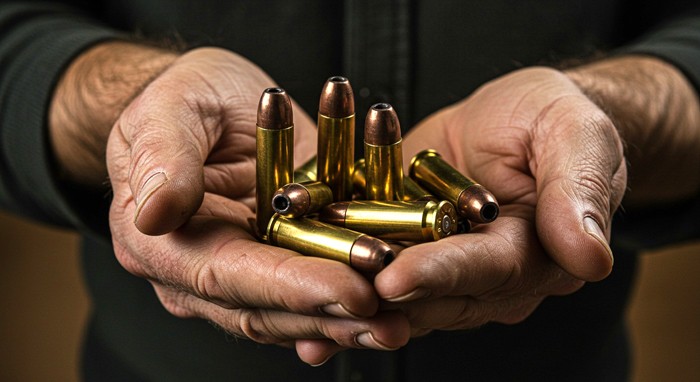
His sponsor, who had recently been re-married a few months earlier, suddenly showed up at his front door without warning. When he opened the door, Kevin saw that his sponsor was sobbing and was holding a handful of bullet cartridges.
When Kevin let him in, the sponsor explained haltingly that in the heat of an extended argument, he had almost killed his wife. "Instead, I got in my car and drove over to MY sponsor's house and handed him the gun," the man said. "But he refused to take it, saying that he didn't want a loaded gun in his house. So, I took the bullets out and handed him the empty gun. And I'm asking you to keep the bullets so I won't do something I'll regret forever."
Kevin said he put the bullets away and spent the next few hours talking to his upset sponsor, helping him to calm down. But he said he learned so much in that episode about how A.A. works. "We don't just support each other in happy times," he said. "We rally around each other especially when life is going sideways -- or downhill."
Kevin said he also realized the truth is the old saying that "no one of us is more sober than the others -- we're just not all crazy on the same day."
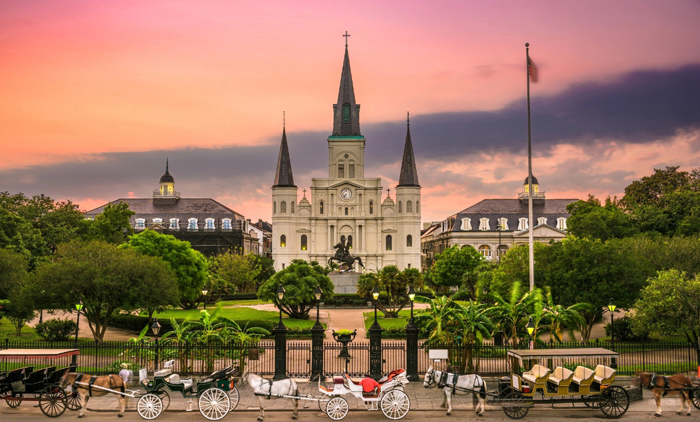
Fast-forward to 8 or 9 years later, when Hurricane Katrina hit New Orleans in 2015 and devastated the community. Over 1,000 people died and 70% of the homes were damaged or destroyed. There were no A.A. meetings because there was no safe place to hold them. And there was no way for members to contact each other because there were no phone lines or cell phone service or internet -- for months.
The A.A. fellowship, or support network, as we understand it, ceased to exist for Kevin and his fellow alcoholics in New Orleans. After a few months of that, in desperation, Kevin and his wife drove to visit relatives in Atlanta and eventually relocated there. His sobriety remained intact. But he still talks about how difficult it was for him to let go of the fellowship he found in New Orleans, after his first dozen years of sobriety.
"And with no A.A. in New Orleans," Kevin said quietly, "Where would my sponsor have found someone to trust with his gun and his bullets? How would that story have turned out differently -- if there WAS NO A.A.?"
This past summer, many of my fellow alcoholics were celebrating A.A. and its 90 years of helping people like me get and stay sober. I had time to consider what life would be like... if there was no A.A.?
Frankly, I sometimes take the gift of A.A. and my sobriety for granted. But Kevin's stories reminded me of how vital the fellowship of A.A. really is... when things are going well -- but especially, when they're NOT going well.
A.A. can get along without me -- but I can't get along without A.A., which protects my sobriety.
Alcoholics Anonymous currently has an estimated membership of over two million people, organized into more than 123,000 groups worldwide. The fellowship is present in approximately 180 countries and A.A. literature has been translated into about 100 languages. For the 2025 International Convention in Vancouver, British Columbia, over 40,000 attendees from more than 80 countries participated, making it the largest convention ever held in the city.
It is alive and well and for me, is a gift that keeps on giving as long as I keep accepting it.
-- Michael Powers